
Turning Waste
Into Hope
Project Espwa is proudly linked with UNEP for the International Day of Zero Waste — 30 March 2027. We believe that what the world calls waste, communities in crisis call a lifeline.
A registered Irish charity redistributing over 740 tonnes of vital surplus supplies per year — by air, road and sea freight — to communities in crisis worldwide.
Countdown to #ZeroWasteDay — 30 March 2027
Three Pillars of Impact
Project Espwa works across the Caribbean, Africa, Europe, the Middle East and beyond through three interconnected approaches that combine humanitarian urgency with environmental responsibility.
Financial Support
We provide direct financial aid to communities in crisis across the Caribbean, Africa, Europe, the Middle East and beyond — funding food, shelter, medical care, and essential services where they are needed most.
Build Programmes
We design and deliver structured aid programmes — from food distribution networks to educational supply chains — building lasting infrastructure that empowers communities to recover, grow, and thrive sustainably.
Circular Economy Aid
We rescue usable surplus goods — clothes, food, medical equipment, construction materials, diapers, bedding and more — that would otherwise be wasted, and reharnessing them as vital humanitarian aid via the circular economy.
Vital Surplus Goods
Over 740 tonnes per year of these surplus goods are redistributed by air, road and sea freight to communities domestically and worldwide — goods that would otherwise be wasted.
Clothes & Textiles
Construction Equipment & Materials
Diapers & Baby Supplies
Hygiene Products
Educational Equipment & Supplies
Food & Water
Bedding & Survival Materials
Medical Equipment & Supplies
Delivered via
Domestic & Worldwide Destinations
Numbers That Tell the Story
Every tonne diverted from waste is a life improved. Project Espwa has now surpassed the landmark milestone of 4,000 tonnes of humanitarian aid distributed since operations began in September 2016.
Aid Shipments Worldwide
Tonnes of Aid Delivered Since Sept 2016
Total Aid Value
CO₂ Saved (tCO₂e)
Tonnes Redistributed Annually
Food Parcels Delivered
Sea Containers Shipped
Road Freight Loads (Ukraine)
Equivalent to removing 2,444 cars from the road for a year, or planting 183,280 trees absorbing CO₂ for a decade.
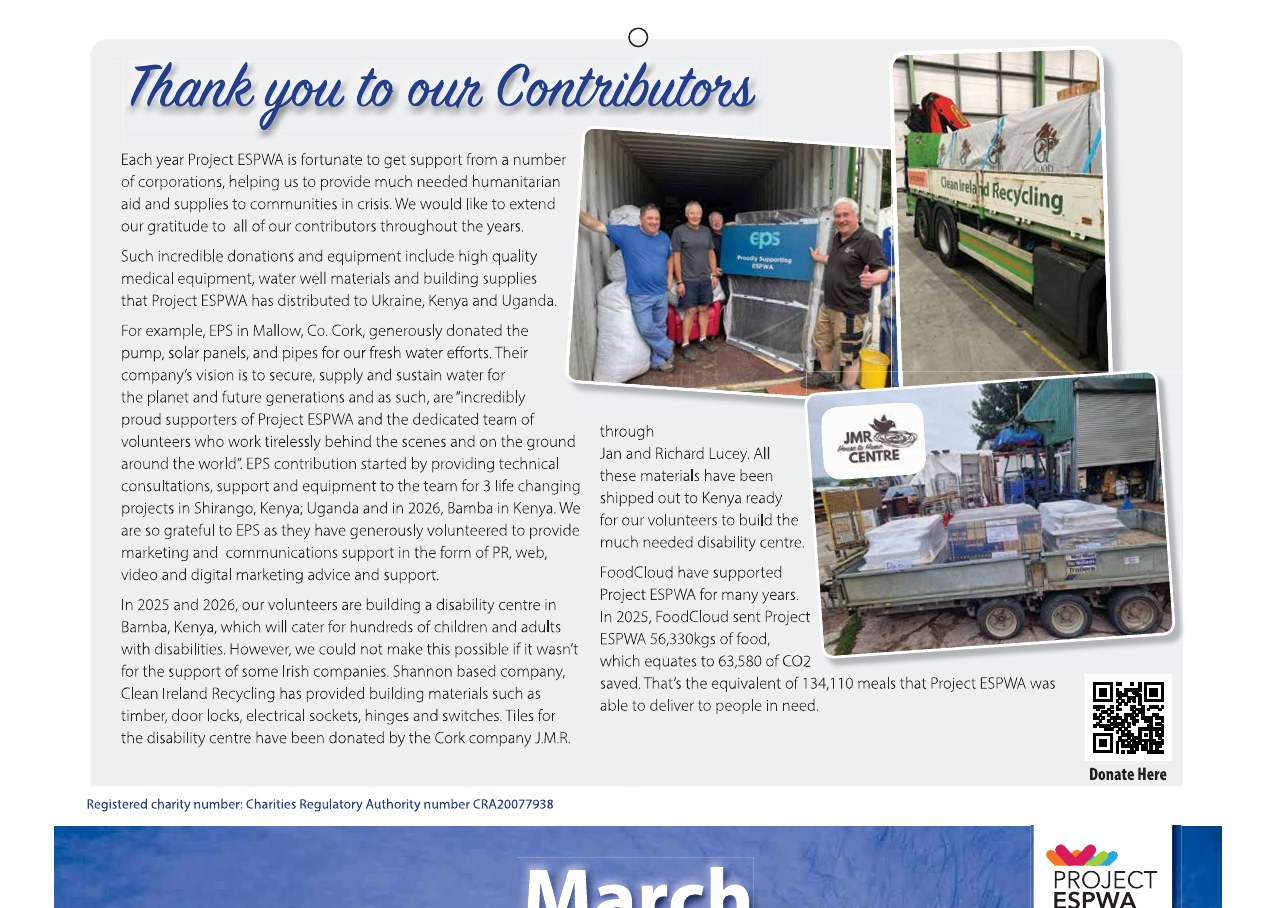
Aid Reaching Every Corner of the World
From earthquake-hit communities in Haiti to war-affected families in Ukraine, from rural Kenya to crisis-stricken Lebanon — Project Espwa's circular economy model ensures that surplus goods from Ireland and the UK become lifelines for the world's most vulnerable.
Caribbean
Haiti, Dominican Republic, Honduras
Africa
Kenya, Uganda
Europe
Ukraine (road freight)
Middle East
Lebanon, Syria/Turkey
Proudly Linked with UNEP
for #ZeroWasteDay 2027
The International Day of Zero Waste falls on 30 March 2027. This year's focus is food waste — nearly 19% of all food available to consumers is wasted annually. Project Espwa's circular economy model is a direct, practical response to this global crisis.
Rescuing Surplus.
Delivering Hope.
Project Espwa sources surplus goods from hospitals, food distributors, educational institutions, retail outlets, and commercial companies across Ireland and the UK. Instead of landfill or incineration, these materials become life-saving aid.
Over 740 tonnes of vital supplies are redistributed every year by air freight, road freight, and sea freight — reaching communities domestically and at destinations worldwide.
- Food surplus rescue — 1.5M+ meals delivered
- Medical equipment & hygiene supplies
- School furniture & educational materials
- Clothes, bedding & survival materials
- Construction materials & baby supplies
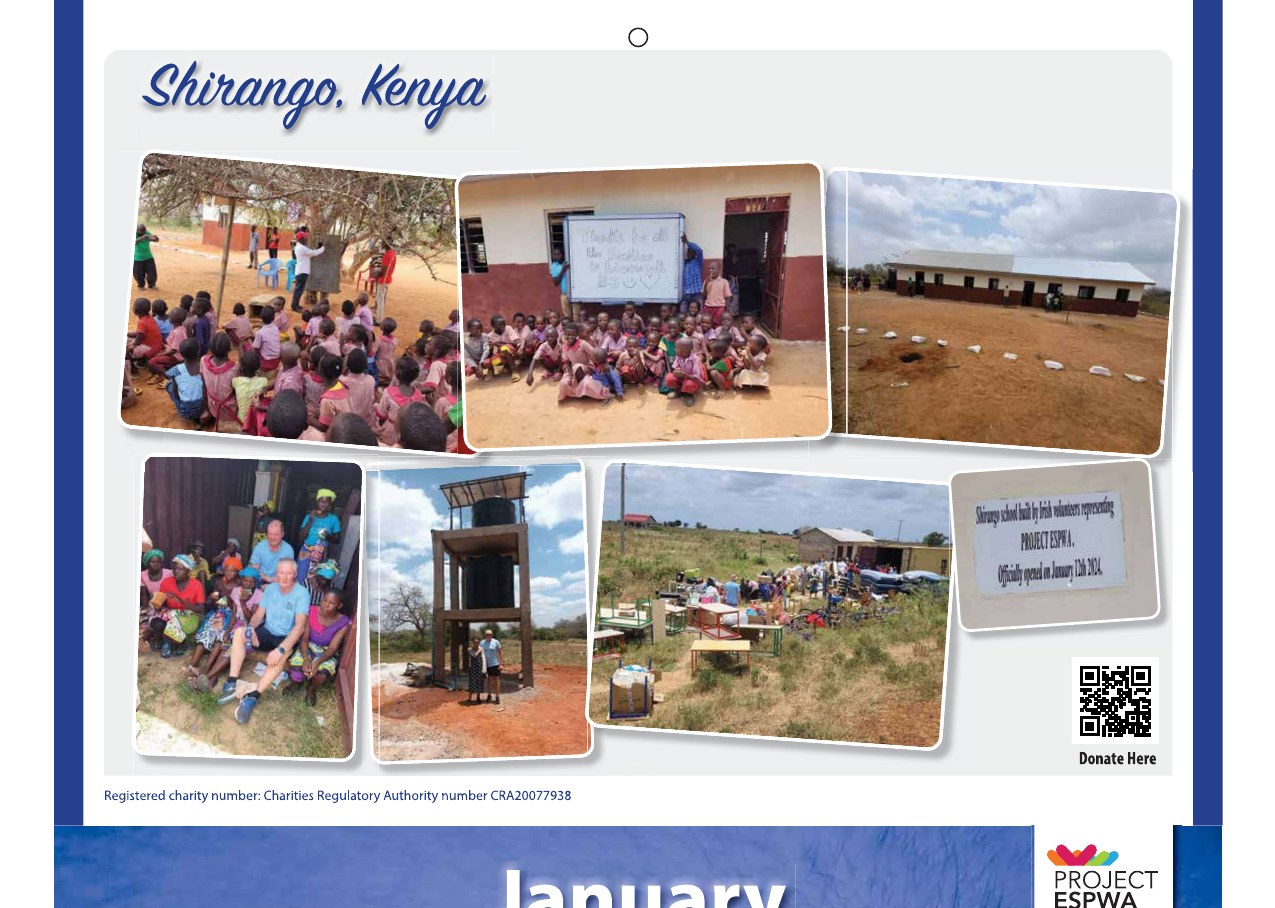
Stories from the Field
Real photographs from Project Espwa's 2025 operations — turning surplus goods into hope for communities across the world.
Road Freight to Ukraine
130+ road freight runs covering over 1,000,000 km — delivering food, medical supplies and clothing to distribution centres across Ukraine, Poland and Romania.
Clean Water in Kenya
From 15km walks to collect water to clean water at home — Project Espwa's aid programmes are transforming daily life for communities in Kenya.
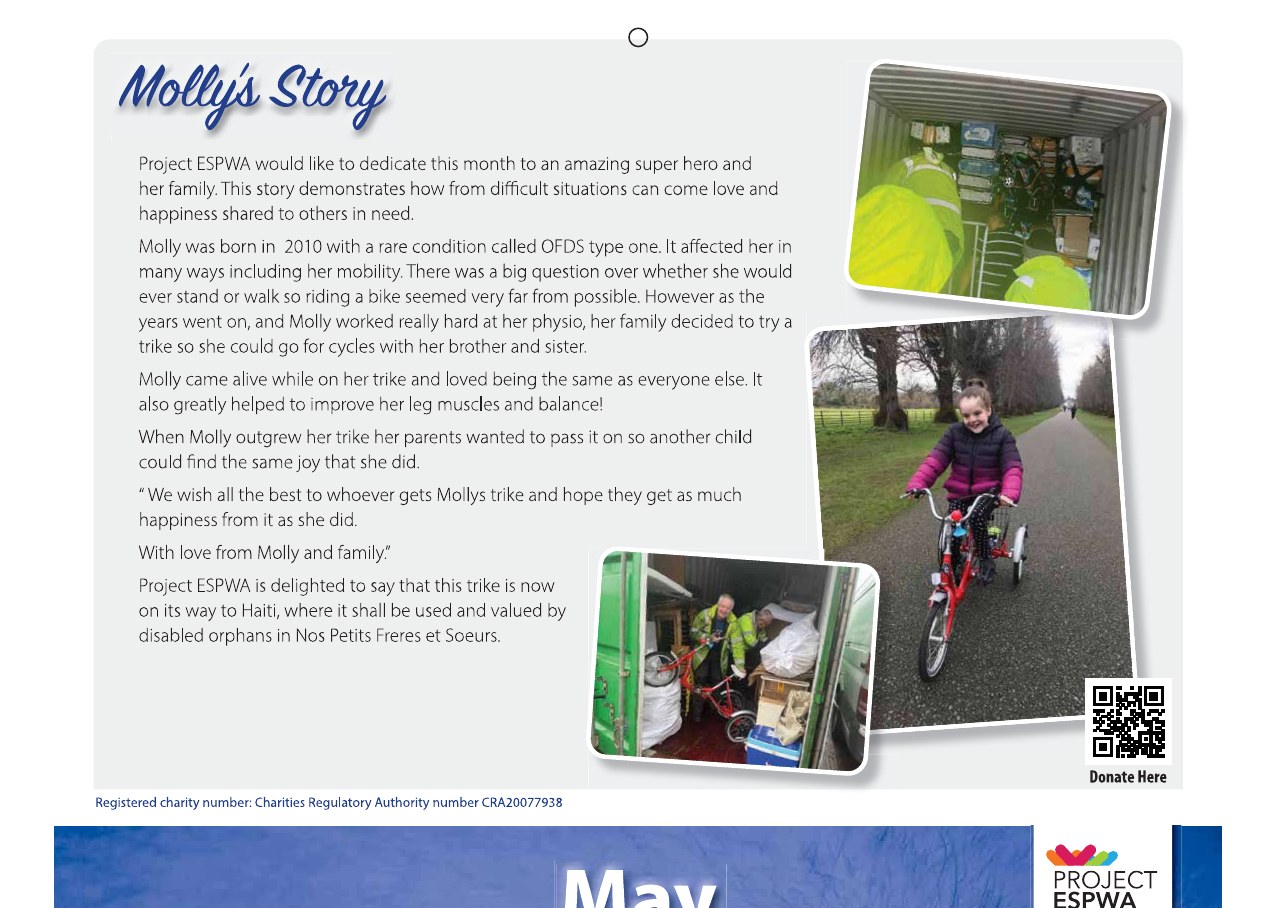
Hope in the Caribbean
Hospital beds, medical equipment, diapers and donated Kelloggs Cul Camp gear — children wearing Irish GAA colours with pride in the Dominican Republic.
From People to Paws
Ultrasound machines from Beacon Hospital now saving lives in Ukraine. Dog food for the Canine Centre, National Police Kherson — service dogs Tor and Ays detecting explosives in a war zone.
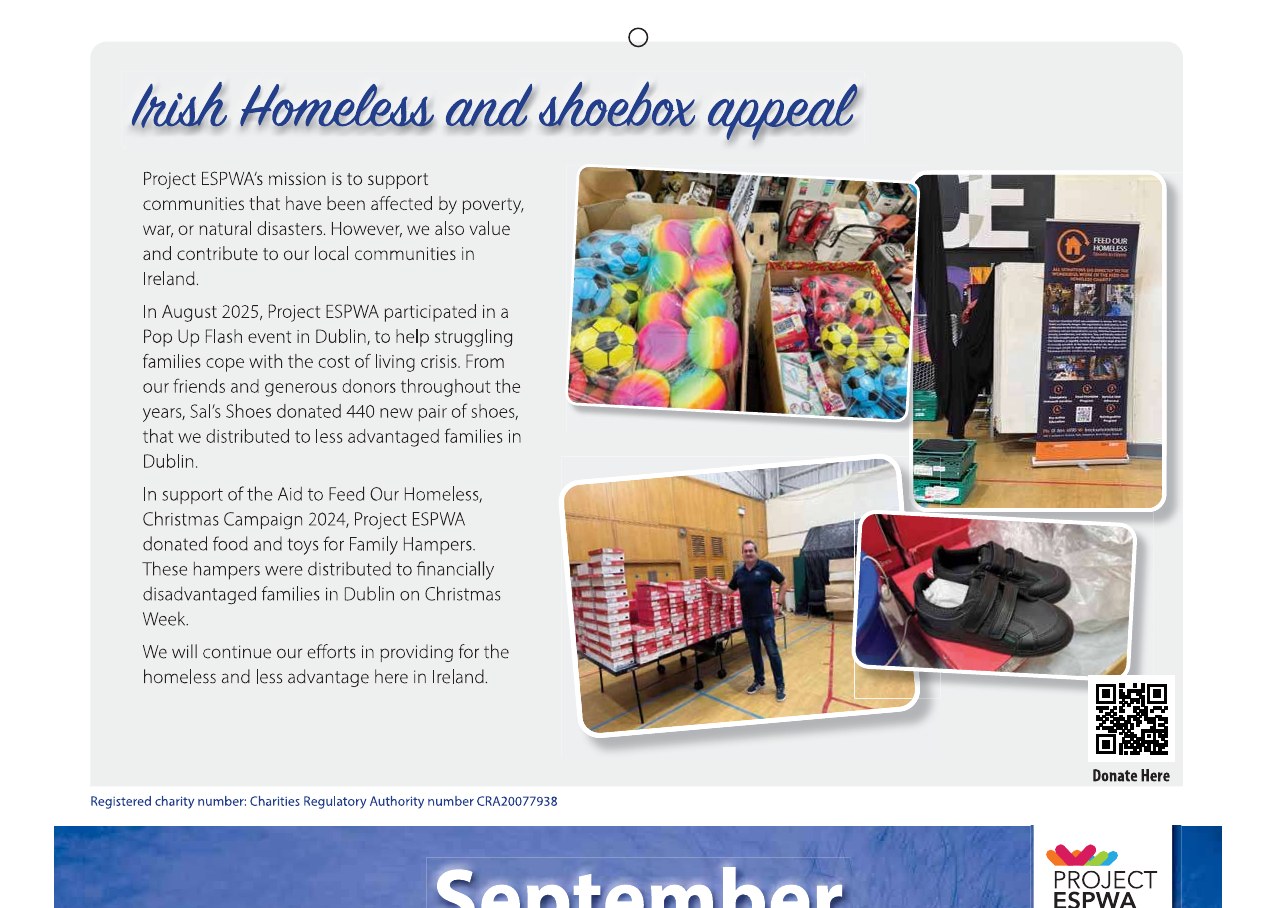
Irish Homeless Appeal
440 pairs of shoes distributed in Dublin. Food and toy hampers for financially disadvantaged families at Christmas. Project Espwa supports communities at home too.
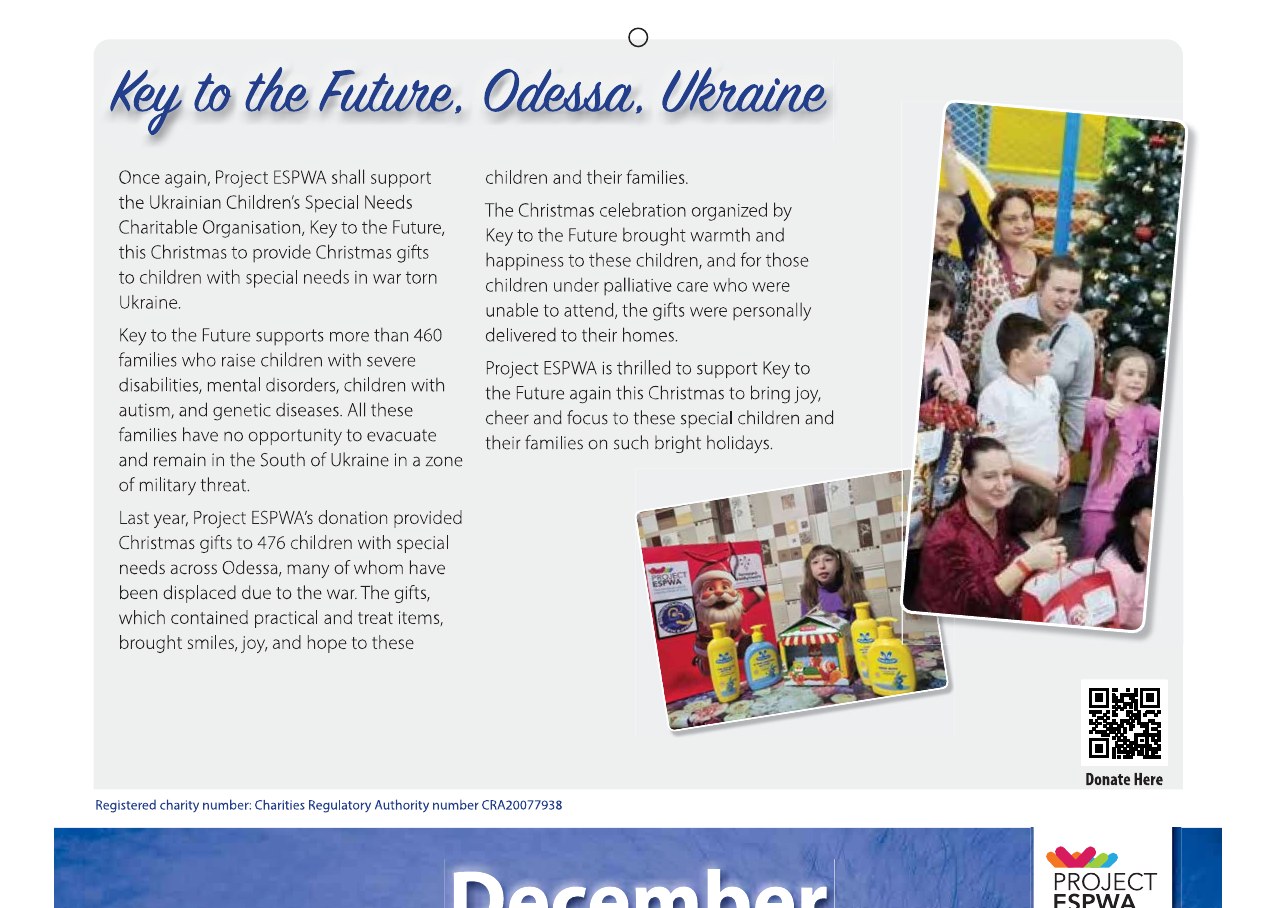
Key to the Future, Odessa
476 children with special needs received Christmas gifts in Odessa — families who cannot evacuate a war zone. Project Espwa brought joy and hope to 460+ families.
News & Campaign Updates
Stay up to date with Project Espwa's latest aid shipments, partnerships, and #ZeroWasteDay campaign news.
Every Euro Makes a Difference
Your donation to Project Espwa directly funds humanitarian aid shipments, food parcels, and circular economy programmes that reach communities in crisis around the world.